People say dumb things about Kickstarter

Standard

So! As I mentioned earlier today, I backed the Kickstarter for the Veronica Mars movie, although I probably shouldn’t have. Not because I think there’s something wrong with a WB property being crowdfunded, but because money is tight and KS is a luxury item. I may cancel sometime in the next month.

Which should not be taken as condemnation of the project itself, of which there has been plenty.

This article by Richard Lawson in the Atlantic Wire seems like a good representative sample of the bullshit people are saying about who ought to crowdfund and when it should be seen as unseemly. Have a quote.

But here in the bourgie, comfy confines of wealthy Western society, we’re talking about people like the indie musician Amanda Palmer, who raised $1.2 million on Kickstarter to make and distribute a folk album. That’s all. Amanda Palmer, who is married to successful author Neil Gaiman and has been a prominent musician for a decade or so. Handed $1.2 million because she asked for it. People are free to spend their money however they want, but there’s something so unseemly about the asking, isn’t there? Maybe that reaction is owed to some overly reserved New England quality in me that I should fight against, but I can’t help but feel that Kickstarter campaigns for stuff like this, that is stuff people are having no trouble selling elsewhere, are a bit gauche. Plus it’s too easy.

Of course he has to take a nasty sexist dig at Amanda Palmer. Of course he has to mention that she has married comfortably (The article is obstensively about Rob Thomas’s project, so where’s a mention of his wife? The article fails to mention if he even has one.) Supposedly, Palmer is so successful that she has 100K laying around to fund her studio time and if she doesn’t, well, isn’t she a big enough name to get that money from record companies?

That money comes with strings attached, you say? Awful, debilitating strings? Apparently, that’s a bonus; we wouldn’t want things to be “too easy.”

Let’s consider the Veronica Mars movie: Maybe it will suck or be vaguely disappointing. That first season was so great while the second and third were a bit of a let down.

But the article writer above barely touches on that. His point is that this movie is a Warner property. They own the rights and will distribute the movie once it’s made. Since that’s the case, isn’t it kinda gross to be asking fans to front the money?

I’m going to step up here and say “Not at all.” Here’s why:

Warner does have control of the Veronica Mars IP, and they have no plans to a) do anything with it or b) surrender it to the original creator, Rob Thomas. It’s just gathering dust. After there was no interest in the season four promo video, the show was dead.

That’s why this Kickstarter makes sense: Fan support can make this happen. What’s more, fans want to be a part of it.

Would I be happy to see gross points in the reward levels? Shit yeah. Is having Rob Thomas and Kristin Bell follow me on Twitter for a year for $400 kinda tacky. Sure, I guess. Do I think they’re doing something really cool with this project? Absolutely.

Lawson doesn’t like the idea of seeing money talked about publicly. He wants artists to raise their money from “proper backers and investors” behind the scenes so he doesn’t have to see art mixed with commerce in such a public way. There’s a laundry list of why this is stupid, beginning with the fact that “proper” investors have already shown their disinterest, continuing through the idea that fans are “improper” backers, and finally ending with art and commerce have always been mixed who the fuck are you kidding?

It won’t come as a surprise to anyone that making things is difficult, especially when they require a large capital outlay. I’m pleased to see a movie like this crowdfunded successfully (or it will be at this pace) and I hope to see more.
Yes, I backed it. It’s Veronica Mars. I had to.

Standard

You don’t have to pledge much to get a copy of the script before they shoot, if you’re into that sort of thing.

I Would Not Have Taken The Flower: An Introvert’s Take on AFP’s “The Art of Asking.”

Standard

First Amanda Palmer raises over a million bucks with her Kickstarter. Now she’s collected over a million views for the TEDtalk linked below. Apparently she likes to do things by the millions. (NB: I would be quite happy with a half as many book sales. Just saying.)

The reason it’s been so popular is that it’s pretty damn good and very interesting. Give it a watch, if you haven’t already.

In case that embed doesn’t work, here’s a direct link.

So many responses all over the intertubes! Tobias Buckell embeds the talk in a post about monetizing his blog; Buckell is a smart dude, but I’m going to call that missing the point.

Kat Howard sees the talk in terms of daring to see what she does as valuable and coming to terms with the idea that people would want to talk to her. While Palmer is talking about connecting with people, which includes struggling with the questions of both trusting them to say yes (without some sort of awful betrayal) and not asking for too much, but Howard is becoming accustomed to the idea that anyone would want to connect with her.

There’s also Chuck Wendig’s post about trusting his readers to pay if he gives away his work, about the internet age breaking the barriers between artist and audience, and about how happy that makes him.

But when he talks about making a connection to his readership, he says:

“If you’re going to be exposed, expose yourself.”

You know what I notice there? The audience is not even mentioned. He’s talking about baring himself through his work, but I don’t think that’s the same sort of thing Palmer is talking about at all.

You’ve watched the TEDtalk above already, right? Once again, it’s good and interesting and it takes the changes our culture is going through very seriously and half of what I’m about to say won’t make any damn sense if you haven’t.

I don’t want the flower. Palmer would have had to make the sad face as I walked away because I don’t want to lock eyes with a performer. I don’t want to share a moment. Palmer may be a performer and (almost certainly) an extrovert but I’m neither of those things.

So, yes. Me = introvert. But that doesn’t mean I’m shy. I’m not, particularly, although the odds are that, if we happen to sit at adjoining tables at a cafe or a party, I won’t talk to you. An introvert is someone who feels drained by human interaction. Taking the flower and meeting a stranger’s gaze for a minute? That shit is tiring. Thanks, it seems very interesting, but no thanks. I have too many demands on my time and energy as it is.

I assume things are different for Palmer. I would be willing to bet a whole nickel (maybe two!) that she’s an extrovert. When I recharge, I seek privacy. When an extrovert recharges, they seek face-to-face human connection. God forbid I should be in a band or do street theater; I can’t imagine anything more draining. I save my socializing-spoons for my wife and son, and sometimes for close friends. Making a connection with strangers? That’s fine in small doses, if I can prepare for it and have a way out when it gets to be too much.

That’s why I think Buckell, Howard, and Wendig are missing the point, even though Palmer herself tweeted a link to Chuck’s post with a big thumbs up. They’re talking mostly (not exclusively, but mostly) about online interaction. About mixing it up with people digitally, maybe through Twitter. Maybe through a PayPal Donate button. Maybe through a well-moderated comment section.

Palmer is talking about sleeping in the homes of strangers. She eats toast at their breakfast table and craps in their toilet. She is right there in their lives for a few hours, because if you’re a fan of hers you can offer crash space to her band. (Be sure to have lots of clean towels because drummers.) That is a very different thing than tweeting funny lolcats to each other, or even mingling in a store after a reading with your Game Face on. What Palmer does is riskier, less-controlled, and more visceral.

Also… Look, I don’t want to seem like I’m slamming any of these writers. I’m not. I’m just saying that there’s a huge difference between connecting with your audience through your art and connecting with them as a human being. She’s doing the latter.

I think that’s great. For her.

I don’t want to do that. This may sound silly, but my supernatural thrillers? The ones with “monsters and face-punching” as I used to describe them? Those were very personal. They are full of my obsessions, and I feel very much “exposed” when I see them in a bookstore or get a note from someone who liked them.

That’s how it’s supposed to be. That’s how I’ve always done it. If there’s nothing personal or painful in a story, whether it’s my issues around food or shame or self-loathing or the way we all tell stories to ourselves to rationalize our choices, that’s me in those books. That’s all my private bullshit. And I put it there for anyone to see, no matter what they might think, because that’s what writing is for. As Nick Mamatas said (rather dramatically) in his writing book Starve Better: “You have to stop caring whether you live or die.

As Chuck said, I’m willing to be exposed (in a mental/emotional sense not physical, because ugh).

Like Howard, like Wendig, I want to connect with people through my work. Unlike them, maybe, that’s enough for me. Yeah, I’m among the audience because I’m a reader and a moviegoer and whatever else. I’ve always been in the audience.

But I’m not out there as an artist because I’m not looking for that personal connection. Palmer wants to be the artist who looks you in the eye. I want to be a twice-removed voice that whispers directly into your brain. Yes, I know that sounds creepy; guess what sort of stories I write. Don’t look at me. Here’s a book. That’s why I wrote it. Don’t open it up until I’ve gotten out of the room. That’s good enough for me.

Free Marvel Comics

Standard

Yeah, I spent an inordinate amount of time this morning putting Comixology on my wife’s iPad and downloading as many of the free Marvel comics as I could snag. I tried for all 700-some, but there were issues with server overload, obviously, so I’m going to try again later.

The free comics (first issues of new and old books) are only available for a short time, so snap them up if you want them.

I have to say that I enjoy reading comics on the iPad. For novels I think paper is better, but the electronic format works nicely with panels and art. I just wish I could afford them.

If getting your book published makes you feel like a beggar, trunk it instead.

Standard

A quick post to share something I’ve been chatting about on Twitter: Here’s John Scalzi shooting down the idea that new writers don’t have the power to negotiate a deal or to demand decent treatment. It’s smart stuff, but I only want to add one thing:

Yeah, Scalzi makes the point that legitimate publishers acquire books because they believe the book has value. That means the writer is not a beggar hoping the publisher will cast a few alms into their bowl, and they’re not a lonely soul moping on the back stairs as the party winds down, still hoping for a pity fuck. They’re makers who have made something of value, and if people[1] aren’t yet treating a book as a thing with some value, then it’s time to write another book.

What’s more, a new writer has advantages over others who have already landed contracts with publishers. It’s easier to break in than to stay in, and that’s a fact. For some writers (me, of course, I’m talking about myself) new books come with a poor sales record attached to them. A writer gets more leverage by being a blank slate than by carrying a few scars. That’s why we sometimes have to start all over again under a new name.

So, if a publisher acts like it’s doing the writer a favor, or that it’s giving the writer to a chance to stick a thumb in the eye of those awful gatekeepers, or that the writer is being given a chance to create a whole new system, those are danger signs. The publisher a writer wants is the one who admires the book enough to treat the author like a business and artistic partner, and who thinks that together they can reach an awful lot of readers.

[1] In this case, “people” covers everyone from agents, editors, reviewers, and those voracious ebook buyers who buy and read a book a day.

Randomness for 3/10

Standard

1) “World’s Greatest Armchair” refills your beer automatically.

2) Six Board Games That Ruined It For Everyone. We own three of the six games they recommend as replacement games, and they’re awesome.

3) Inventors can stop inventing now. The pinnacle of all technology has been achieved.

4) Women vs Tropes in Video Games: Damsel in Distress. Video.

5) You may only kill a Yeti in self-defence.

6) Garage full of art turns out to be worth $30 million.

7) A Mississippi newspaper addresses reader reaction to a story they ran on a same-sex marriage.

Insert jokes about Hydra and Alibi here.

Standard

Quick pointer to John Scalzi’s post Raptors at the Fences. For those missing the context, he covers the contract and deal memo language Random House is offering in their new imprints, Hydra, and Alibi, (and presumably their others) in previous posts.

Let me add a short note to what he’s saying, especially in light of what some of the commenters are saying. An abusive publishing contract is worse than no contract at all. It may seem like you could take Hydra’s genuinely terrible offer and parlay it into something worthwhile, but that just isn’t so. What actually happens is that you burn up however many months or years you spent creating something that story, and you feel dirty afterward.

I saw it happen over and over again back when PublishAmerica was running hot and heavy. Now RH seems to want to remake itself into something even worse than PA. It’s awful. It’s dispiriting. No one has to put up with it.

Here’s the point: If you write a book that readers will want to read (note that I didn’t say good just readers will want to read) then you have a very good chance of selling it to someone somewhere who is willing to offer you a decent, industry-standard contract OR find success self-publishing it. If neither of those things happen, the odds are strong that the book is not as strong as you think it is, and you’re better off putting it in the trunk while you create something new and better.

If the book is that rare wonderful piece of art that ought to be successful but gets overlooked (hey, it’s rare but it happens) then no worries. You’re still creating something new and better. Once that finds success, you can drag out your old trunk novels and look at them again.

No contract is better than an abusive one. Keep away from these new Random House imprints. If you’ve written a book that can succeed, you don’t need them.

Randomness for 3/5

Standard

1) The 18 officially-sanctioned hair styles of North Korea.

2) “Dead giraffe. Bars of silver. Robot hand.” Thinks found underwater in New York.

3) al-Qaeda’s 22 Tips for Avoiding a Drone Attack.

4) Lego Hogwarts. Hundreds of thousands of pieces. Months to build.

5) The Urbee 2: a 3d printed car.

6) A really excellent book cover.

7) Gender inequality in publishing: Some actual numbers. via @jodipicoult

After a rough weekend, a new book is released

Standard

This past weekend was pretty rough. The one bright spot was lunch on Saturday to catch up with an old friend, but the rest was a litany of minor difficulties: tiny black ants came through the wall that divides my bathroom from a neighboring unit, the section of book I’m writing “feels” wrong while I push through anyway, I’m getting phantom food reactions, and my son had one of his irregular bouts of insomnia which meant he was up in the ass-hours of the morning and punchy through most of the day.

It gets to the point where a guy can’t even steal time to post on his blog.

I have a post brewing about peoples’ tendency to see fantasy as a conservative genre and another about the interesting Amanda Palmer TEDTalk that’s been going around, but both have fallen victim to the demands of making wordcount for THE WAY INTO MAGIC.

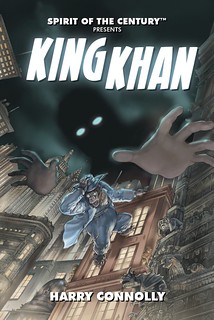
But I do want to announce the release of this:

KingKhanCover.jpg-large

Yes, the Spirit of the Century tie-in novel I wrote for Evil Hat has been released as an ebook, but only to the people who backed the Kickstarter. If you’re one of those people, you can download the book from here. If you didn’t back the project when it first went live, you’ll have to wait a bit for it to hit the stores.

Now, I know there are lots of folks out there who could find a way to torrent a copy or whatever so they have a chance to read it right away. If you do, please consider buying it anyway when it hits the stores, maybe as a gift or something.

Thanks!

The Onion Apologizes

Standard

Over on Facebook, The Onion apologized for their nasty tweet last night where they called a little girl a cunt.

Feb. 25, 2013

Dear Readers,

On behalf of The Onion, I offer my personal apology to Quvenzhané Wallis and the Academy of Motion Picture Arts and Sciences for the tweet that was circulated last night during the Oscars. It was crude and offensive—not to mention inconsistent with The Onion’s commitment to parody and satire, however biting.

No person should be subjected to such a senseless, humorless comment masquerading as satire.

The tweet was taken down within an hour of publication. We have instituted new and tighter Twitter procedures to ensure that this kind of mistake does not occur again.

In addition, we are taking immediate steps to discipline those individuals responsible.

Miss Wallis, you are young and talented and deserve better. All of us at The Onion are deeply sorry.

Sincerely,

Steve Hannah
CEO
The Onion

That’s the way an apology ought to be done, with none of this “We’re sorry if people were offended” bullshit. Still, it would have been better not to make the mistake in the first place.

Always punch up. That’s the point of satire and mockery. I’m not sure who said it first, but you don’t make fun of the people who are weaker or more vulnerable than you; you go after the powerful and the comfortable.

That’s not just a good rule for life, it’s a good rule for fiction, too. If your protagonist gets snarky and mean to people less powerful than they are, they are a shitty person. Always punch up.