The second symptom of a kid’s sickness is a ruined schedule. In a few hours, my wife will return home and I can tag-team out to do some writing revisions.
Luckily, I’m utterly immune to disease of all kinds, like a paladin.
::kaff::
The second symptom of a kid’s sickness is a ruined schedule. In a few hours, my wife will return home and I can tag-team out to do some writing revisions.
Luckily, I’m utterly immune to disease of all kinds, like a paladin.
::kaff::
I call it the “bullshit.” As in: “I did one bullshit worth of work on my revisions today.”
Which isn’t fair to my revisions, because I found a minor inconsistency that I needed to hunt down and fix, and that stupid crap takes time. I would have had to fix this at some point, right?
Still, it’s frustrating to have this dumb stuff take so much time especially since it means I can only finish bullshit.
I saw THE AVENGERS yesterday with my son. He loved it, naturally, and so did I. While we waited for the bus home, I asked him which Avenger he would most like to be (a sure way to tell which he that was the most awesome) and his answer, after a moment’s thought, was Hawkeye.
Hey, who could argue with that? Or with a kid pretend-shooting arrows at all sorts of unlikely targets as we walked home.
Here are my thoughts on the movie: (Spoilers behind the cut) Continue reading
1) Avengers Mashup Movie Posters
2) Hard to believe it’s been 20 years.
3) Planet of the Apes Dance Remix. Video. Pure Awesome.
4) Mark Waid’s Thrillbent is live.
5) Bed Cartography. Not that this has any relevance to my life, not at all.
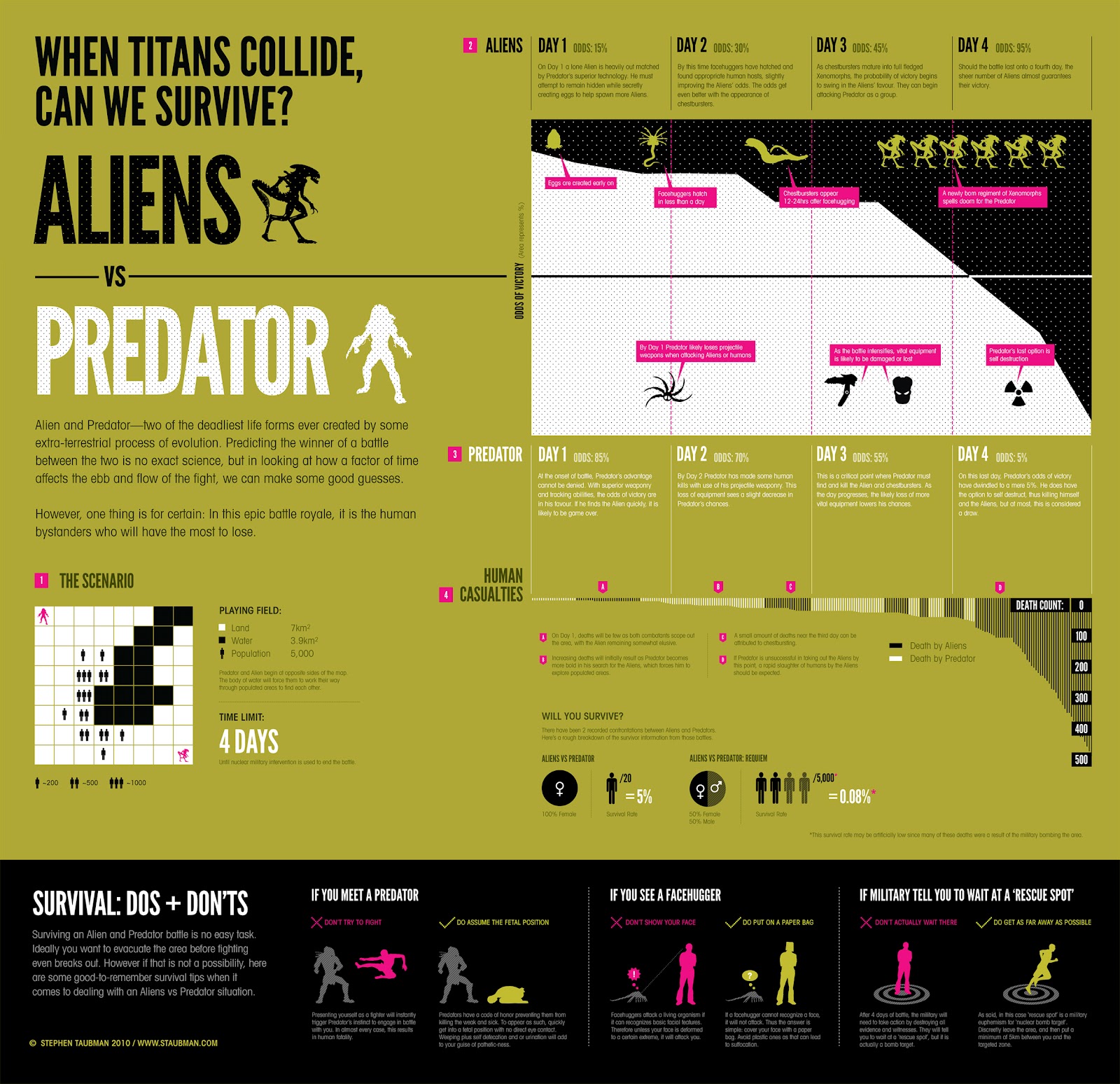
6) Alien vs. Predator, the infographic.
7) D&D co-creator Dave Arneson’s personal collection and archive to be auctioned.
Seattle superhero Phoenix Jones (and his buddy Midnight Jack) were out among the crowds during yesterday’s May Day protests, and man don’t they look like self-aggrandizing fools. I’d always been vaguely sympathetic to the guy because he seemed to honestly want to do some good while avoiding the idiocy of other self-styled heroes, but this is just embarrassing.
And now Seattle has it’s own “social villain” calling Jones out. The video is pretty funny, to be honest.
Over on Tor.com, Shoshana Kessock compares the portrayal of women in Game of Thrones and Girls and comes down on the side of the genre show, despite its problems.
Me, I haven’t seen either show. I have read Martin’s novels and I listened to an interview with Lena Dunham on NPR. Maybe that limited exposure should disqualify me from commenting on the topic, but this is my blog and I can be wrong if I want to.
Anyway, while listening to Dunham on NPR, she specifically addressed the whole “Voice of my generation” bit, making it clear that the character was ridiculous even when she wasn’t stoned and that she hoped viewers would recognize it wasn’t to be taken seriously. In fact, she made it clear that she was making an effort to portray a character who was not admirable at all–she admitted that others involved in the show had to make her pull back on the amount of humiliation heaped on her.
And my first thought was “She’s writing to literary protocols.”
Years ago when I was studying everything I could find about writing, someone (I’ve forgotten who) said that genre characters always (or nearly always) operated at the best of their ability. Whether it’s Conan fighting a giant snake or a CPA who discovers that her daughter has been kidnapped by a motorcycle gang, the characters may not always have skills and competence in a particular situation, but they do the best with what they have. If they do make mistakes, it’s either like Peter Parker letting the crook escape (a lesson that needs to be learned/kick off the story) or it’s the cop who arrests the wrong person (a mistaken action based on a misunderstanding of the evidence at hand).
When a character persists in their error, the way Neo continues to resist the idea that he’s living in a computer simulation, the instinct is to become exasperated with them. The same is true for stories where the audience wants the protagonist to operate at their best but they don’t (or don’t appear to be) such as addiction stories.
But in stories aimed for a literary market (at least the ones I’ve read) the characters rarely operate at their best. They’re feckless, selfish, self-delusional, or flawed in all sorts of ways. They don’t get out when they should. They don’t address their problems in a way that would fix them. It’s like Joe Gillis in Sunset Blvd: The movie starts out with him shot to death, and you see the long awful comedy of errors that led him to that fate.
Obviously, there’s overlap here; you can’t make large generalizations about groups of books (or readers) without begging exceptions or edge cases, but to me it looks like a clash of two conflicting artistic impulses.
It’s been a while since part 3. Sorry about that, if you care. Truthfully, I’m behind on my WIP and I’m having trouble prioritizing this. Quick recap: I’m using this article: Twelve Things You Were Not Taught in School About Creative Thinking as a springboard to talk about my own creative processes.
7. Expect the experts to be negative.
This section of the article is more for office workers than it is for creative people. Wait, I take that back. It’s not an issue for me because I don’t really have someone telling me that I can’t do something before I do it.
For example, when I was planning my story for the Don’t Rest Your Head anthology, I told editor Chuck Wendig that I was planning to center the story around the death of a child. Chuck wasn’t happy with that at first, because it’s a touchy subject that turns people off (and too often he’s right). Still, I told him I thought I could make it work and he told me to go ahead.
Chuck was the expert in this situation, and rather than put his foot down, he said: I bet you can prove me wrong. In the end, he accepted the story pretty much as written.
This is what it’s like when an editor–especially a really really good one–is “negative” about creative choices. As I said down in comments, it really was ego-less arguing. She wanted me to save a couple of the Game of Cages characters for a future book, and she wanted me to cut The Sentence (for those who’ve read it, it’s the long murder scene that’s written as a 500+ word single run-on sentence). Cutting that violent scene could have given the book a more upbeat adventurous ending.
Of course, I didn’t cut that scene. I did change the book substantially to make The Sentence work–including saving one of the characters–but for me that scene was the whole point of the book, and I had to have it.
Now, only one reader has ever told me they disliked it. Several really loved it, but people who don’t like GoC rarely mention The Sentence. Was my editor wrong? I don’t think so. I’m betting that, with a more upbeat adventurous ending, it would have gotten better word of mouth. Maybe it would have sold better. Maybe the series would have survived.
I still wouldn’t go back and change it, though.
So, the most a writer like me has to worry about isn’t that my idea might get shot down, the way a bright-eyed ad exec with a crazy new concept might be. It’s that no one will want to buy it, and you can’t really tell that until it’s too late.
8. Trust your instincts.
I’m not going to respond to this part of the article, except to say that the only sensible response to “They laughed at the Wright Brothers!” is “They laughed at the Marx Brothers, too.” It’s okay to be discouraged. It’s okay to give up on writing.
Seriously, I honestly believe this. I’m not one of those people who tell people to never stop trying; who’s to say what’s the best use of your time? Not me. Maybe someone who stops writing would go to work in a soup kitchen with that free time. Maybe they would spend more time with their friends, or edit Wikipedia in a useful way, or do any number of genuinely helpful things.
Write if you want to and if you think you have a chance to find the success you’re hoping for. Just be aware that you may never get it (I may never get it) and even if you do it won’t make you happy.
However, I should point out that I’d already quit writing when I’d signed with my agent. I was not going to start a new novel; I planned to go back to school to get a graduate degree in hopes of finding a career. All my writing time was spent studying for a GRE. Then my query letters started getting positive responses.
So who am I to say that people shouldn’t be discouraged? Creativity doesn’t have anything to do with success. You can be extremely creative but never find an audience for a host of reasons: Maybe your creative ideas are too far outside the mainstream. Maybe you’re creative but don’t have the writing skills to put together a sensible paragraph. Maybe you have other uses for that time, or new priorities. Who knows?
Quit if you want. Live your life. That’s what I say. Maybe, someday, I’ll do that myself. But in the mean time, I intend to write the stories I want to write, the way I want to write them. Anything else would take the joy out of things.
For the next post I’ll talk about failure. Jeez, this just gets more cheerful all the time, doesn’t it?
We’re game-heavy this time. Must be some sort of sign.
1) This sort of thing makes me miss gaming.
2) Father takes crazier, funnier pictures of his kids than I ever could of mine.
3) A water slide so dangerous it was shut down immediately.
4) Should I check email? A flowchart.
5) How to escape from zip tie “handcuffs”.
6) A fantastic D&D blog. I’ve added this one to my reading list. I especially liked “Items of Moderate Interest in the Ogre-King’s Hoard.”
7) What’s it going to take for the Don’t Read This Book anthology (which I am in) to turn a profit? A little publishing transparency from Fred Hicks.
Like a lot of overweight people, I wear running shoes. (Cut for triggery weight discussion) Continue reading