Walking Away From the Same Old Same Old, or The Man Who Revises

Standard

Time for the March report:

First, book-wise, which I’m sure is the main reason you guys are reading this, I want to report that I worked through the problems with that problematic scene. 

Weirdly, this extended scene doesn’t feel all that different, but it’s shorter now and the people in it act the way people act, which is nice. 

And with that, we segue into a pop cultural topic. 

When my son had just turned ten years old, I decided it was time for him to see Star Wars. I was a little older than him when I saw it in theaters in 1977, but I figured ten was the perfect age to see that movie. 

Anyway, I’ve told this story before, but we were watching the film together and, right in the middle of the climactic dog fight, where the X-wings are flying down the trench trying to explode the Death Star, my own son got up off the couch and walked away. He just wasn’t interested. I watched him sit at his computer and start up Minecraft game while the TV was filling the room with pew pew noises.

Now, there are a lot of platitudes that could be mined from a story like that, and I like to think I’ve typed my share of them into the big empty void of the internet, but I was reminded of the incident once again last Wednesday.

Because here’s the thing: I showed him the Star Wars movie without taking into account that he had already played the Lego Star Wars video game.

Those Lego games take every moment from a film and stretch it until every plot point of the movie needs fifteen minutes of smashing and building things before you can move on to the next. (I exaggerate, maybe, but not by much) The point is, it’s slow as hell, and along with all the other reasons my son would not respond positively to old timey science fiction movies like Star Wars, is the simple fact that he’d already been there and done that, at length.

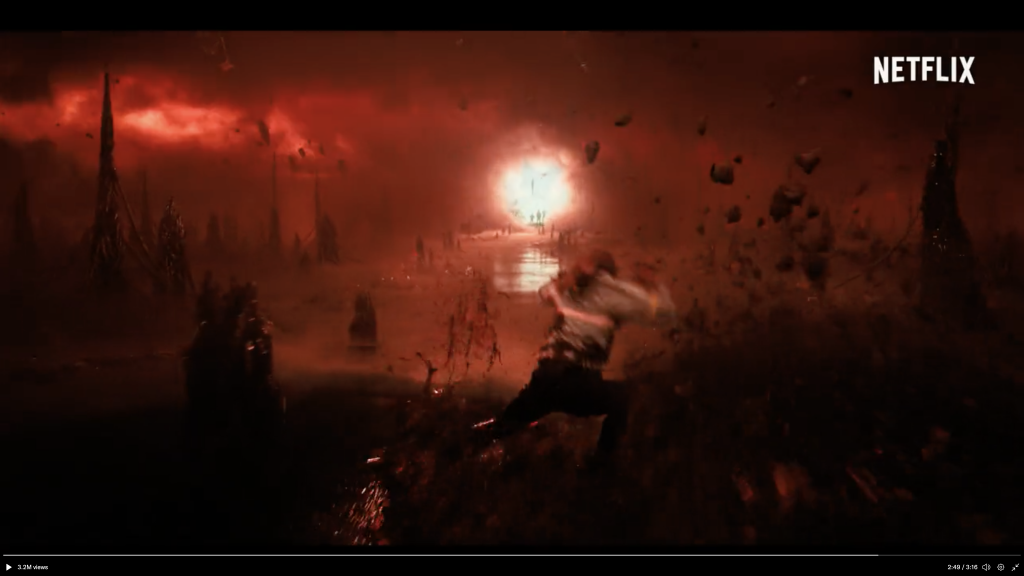
And the reason all this came up again was because the teaser trailer for the Wizard Boy tv remake dropped. 

Personally, I have no interest in watching the upcoming Wizard Boy tv show. For every pound sterling that goes into that franchise, some portion is diverted into taking rights away from vulnerable populations. I’m not going to put a ha’penny into that. I don’t care if this new show is The Wire for fantasy YA lovers, human rights matter more.

But once people on my Bluesky timeline start talking about how terrible the teaser trailer looks, I absolutely want to see how and why it sucks. 

So I did and it looks slow. Harry deals with bullies in a muggle school. Aunt Petunia giving his hair a hate-trim. Harry and Hagrid sitting on the tube, having a conversation.

It looks like they’re going to show all the usual story beats, but slowed down to fill up a streaming season, and you know they’re not going to take IP this popular and make fewer than ten episodes a season.

So maybe that’s why the teaser–a teaser!–feels so slack. 

I’ve seen people complain about the way it looks, but I like the candlelight aesthetic for Hogwarts. It’s dumb–magic lanterns would make more sense–but it’s pretty.

Still, so much feels recycled from the films. (Confession: I haven’t read the books since Family Reading Time, more than 15 years ago, so the movies are my main reference.) The train scene, the wand shop, even the lettering on the Hogwarts envelope, it’s all stuff we’ve seen before. 

Worse, the tone is reverential when it should be playful and fun. And they’re button-mashing the “You’re secretly the specialest boy ever, Harry!” button when the character’s most endearing trait is his desire to be ordinary. And Hagrid has been reimagined to be smaller than life. 

And let me be honest: I’ve watched worse things. I recently told some friends that last years Red Sonja remake was a scrappy B-movie. I watched the live-action Last Airbender remake. And years ago, when the first D&D movie came out with Jeremy Irons chewing up the scenery, I knew it would be terrible but I put a 20-sider into my pocket as a talisman against high expectations and saw it in a theater.

But I won’t be watching this, not unless Rowling has a sudden realization that she’s become one of the bigots she was trying to lampoon when she wrote the Malfoy family. Or if she predeceases me, I guess. But I don’t wish her harm. I wish her enlightenment. 

However, if there is any force in this universe that will lessen Rowling’s ability to hurt vulnerable people with the power of her overstuffed bank accounts, it won’t be righteousness. It’ll be the perception that her new show is a dull, meandering retread of the same old same old. Which is what it appears to be. 

Back to work for me.

But first, I want to thank everyone who has been chipping in extra to my Patreon since my wife was struck by a car. We are incredibly grateful for your help.

Talk to you guys next month. 

Writing Update, Personal Update, Pop Culture Update

Standard

It’s been too long since I dropped an update and talked about some random news, so let’s see if I can squeeze some time in for that right now.

Progress on the new novel has been glacial. I know that’s not what you wanted to hear, but I’m tackling a big story with a lot of POV characters, so I’m doing a lot of research and rewriting.

Also, I haven’t been 100% well. I don’t want to get into details here, but my daily wordcount goals are somewhat reduced. I’m still writing, but it’s a struggle and I’m getting pretty frustrated with myself. Not only does it suck for you, the reader, that it’s taking too long to get this next book solved and finished, it sucks for me. In a huge way.

It’s hard to overstate how unhappy I am about this, actually.

But this is the state of things at the moment and there’s no choice but to persevere. On the plus side, I have a new doctor who recognizes that I am more than just my BMI, so there’s hope in that.

To be clear, I’m not talking about Twenty One Palaces. This is the book I’m writing before that book which doesn’t have a title yet.

What else?

I’m pretty much walked away from social media. I unfriended everyone on Facebook and stopped looking at it years ago, although I still post whenever I have a new blog post to announce. I check notifications there every two or three months, so please don’t try to contact me there. I probably won’t see messages or comments for weeks, at minimum.

Also, they’ve changed the format so much that I’m not sure how to navigate it anymore. Also, there doesn’t seem to be any reason for me to learn.

I left Twitter, too, although I still occasionally check the Stranger Things account for news about the show. But now that the final season is in production, I’ve pretty much stopped that, too.

BlueSky is the only space where I hang out online nowadays. I’m byharryconnolly over there, if you’re curious. My follows over there make the site pretty political, which is fine and all but before Twitter became a collapsed outhouse, it was a great place to talk about pop culture and pop culture art. That’s harder to find on BlueSky. Not that it matters much, since I’m not there very much.

Speaking of pop culture art, here’s a quick rundown of random stuff:

I’m rereading Salem’s Lot. It’s just as fun as I remember and has the pacing of an avalanche. There are just a few snowballs at the start but the end is overwhelming.

Next up for me are a pair of novels by Catriona Ward. I heard good things and I’m hoping she can help me overcome my ongoing reading slump.

Musically, I’ve been listening to a bunch of The Breeders and Belly. Yeah, it’s old music. See Salem’s Lot reference above. I’ve always been like this. I could never take part in Hugo voting or whatever because I never read books as they’re released. The songs are still great, though, esp the most recent Breeders album.

In movies/tv, The Holdovers was moving but not lovely, which is a solid recommendation from me. However my wife likes a little eye candy in her films. Landscapes. Architectures. Gardens. That sort of thing. She she admired it but wished for more.

We definitely got our fair share of lovely images in the fifth season of Fargo, and the story was fantastic. I love it when stories that don’t seem much like SF/F throw a few sfnal tropes in there.

I enjoyed Echo quite a bit, in large part because I like street-level heroes. I’m not sure how I felt about the ending, though.

Yes, this is a story about a woman who’s disconnected from her community and her culture, so the way she levels up at the end made thematic sense. Also, Maya’s relationship with Wilson Fisk was complex, ominous and poignant, too. Still, it’s a show about a hero that kicks ass but the final confrontation had more than a bit of woowoo. It felt weak. Intellectually, I appreciated it. Viscerally, I felt vaguely disappointed.

And The Marvels just landed on Disney+. I’d seen it in the theaters and watched it with my wife Wednesday night. Honestly, I have no idea what people were complaining about. It was breezy fun with lots of color and light-hearted humor.

Also, while it’s a sequel to the movie Captain Marvel (and it helps to have seen that film) having seen the other parts of the MCU that it pulled story elements from seemed entirely optional to me. Everything that needed explaining was explained in The Marvels itself.

That’s all. I’ll try not to be absent for so long in the future, and when I come back, I hope to have better news.

A Child of Many Mothers: Sequels, Asterisks, and the Expanding MCU

Standard

So, I went to see The Marvels when it premiered. Takeaway: I enjoyed it despite its flaws. It was funny. It was goofy. It had big, complex battle scenes. It established that flerkins have Hammer Space inside them. 

More importantly, the characters were engaging and the storyline was genuinely fun. It’s not the greatest of all MCU films, but it’s not terrible. 

Unfortunately, the box office was surprisingly soft and the second week drop was huge at nearly eighty percent. I’ve been looking at various reviews and online commentary to figure out why so few people bought a ticket for this one. 

There are a lot of hot takes out there, some sensible and some risible, but I want to focus on one in particular:

Some folks have been complaining that the MCU has gotten so big that casual viewers can’t keep up with it all. They call it “homework.”

This is the one that interests me most, because the people saying this are complaining about the way comic books have been telling stories since I first started reading them back in the 1970s.

Okay. Here’s what I mean: You’d be reading a Captain Hero Guy comic, and see a thought bubble above Our Hero’s head that read something like:

Every since I resigned from Fighting Hero Team*, Dad has refused to return my calls.

And at the bottom of the panel would be a little box with the caption:

* As seen in Fighting Hero Team #86!

Although sometimes it might say something as simple as

* see last issue

Now, obviously, comic book publishers hoped that that little caption would prompt Captain Hero Guy’s fans to buy FHT 86. They’re a company. This is a capitalist country. They wanted to boost sales. We live in a society.

But boosting sales wasn’t the only effect. This asterisks also gave the reader the feeling that they were entering a big, interconnected network of stories. Captain Hero Guy existed in a wider world than could be contained in a single floppy, and new comics readers had to decide if they were willing and able to accept that they did not know every detail of every aspect of the story. Because if they hated that, they weren’t going to keep reading. 

And the MCU has gotten big enough that it’s becoming more like the comics. The setting is full of characters. It sprawls. Maybe you, the generic viewer, won’t know every detail fo an established character’s back story, and maybe all you’ll get in the movie you’re watching is “I got my powers by pushing through the boundary of a witch hex” (or whatever it is Monica says). 

It’s ambiguity. It’s the deliberate denial of casual expertise. It’s the feeling that comes from knowing the whole party is bigger than party going on right here in the theater.

Can you, the critic or the generic viewer, handle that? Can you invest in these characters when you don’t know absolutely every bit of lore? Because if you can’t, they’re freely available behind the Disney+ subscription fee, assuming you have the time and interest to spend on them. Many don’t. 

Obviously, it was much easier for those poor, long-suffering critics to keep up when Marvel was only releasing a few movies a year. All they had to do was pop in to a theater every few months and, as long as they could stay off their phones during the movie’s runtime, they knew everything they needed to know. 

Now they’re expected to play an active role in understanding a movie that supposed to be (and is) pleasant-distraction-grade corporate entertainment, and they either don’t have the tools for for the job or they can’t be bothered. 

Here’s a simple fact: You can’t argue with other peoples’ boredom. We’ve had a lot of superhero entertainment over the last 20+ years, and while it’s an incredibly adaptable genre (you can combine it freely with so many other things, like heist movies, space opera, horror, raunchy comedy, conspiracy thriller, rom com, noir, coming of age stories… at some point, someone is going to make a mid-budget “Romancing the Stone” -style romance with superpowers and they’ll clean up) we’re not really getting the diversity. 

Instead, we get a lot of sci-fi action stuff. For example, Blue Beetle (the movie, not the character) was fun, but a lot of it felt like it had been made from pieces of other movies from the last fifteen years. Sidenote: I declare a moratorium on protagonists who blast through the roof of their homes because they don’t know how their flight works. 

I guess there was some wisdom in the early Marvel plan of making the TV shows follow the movies, but not expecting the movies to reciprocate.

Sometimes a movie is a sequel. The Marvels was a sequel to Captain Marvel, in that you couldn’t really get it without seeing that first film, but all sorts of people seemed to think it was a sequel to a laundry list of other stuff: Ms. Marvel, Wandavision, Secret Invasion, and who knows what else. I disagree. The important parts of Monica Rambeau’s backstory (her relationship with Carol) all took place in the Captain Marvel film. The parts that can be easily glossed over (where she got her powers) were easily glossed over. 

And there was nothing confusing about it to viewers who stayed off their phones.

Personally, I thought The Marvels handled its exposition perfectly, but many viewers seemed spooked by it. As the MCU continues to sprawl across characters and storylines, we’ll see if they can get comfortable with those asterisks. 

Fantasy tropes, character classes, and “The Rules”: Netflix’s Wednesday

Standard

I’ve been meaning to write about the show Wednesday since it aired on Netflix, but it wouldn’t come together. Then I watched this video interview with the showrunners, and heard the interviewer call the show a comedy, and something clicked. 

I like the 1991 film in a middling way. The only parts I really enjoyed were Raul Julia’s face when he gets cut in the duel with Dan Hedaya and the scene where Morticia gives Fester a tour of the family ceremony. “We gladly feast on those who would subdue us.” Excellent. 

But the thing I remember most about that movie was a line from a review (yes, I know that’s weird and I wish I could find it now). In it, the reviewer asks (and I’m paraphrasing from memory) “What are the Addams family? Are they ghouls? Something else?”

And, yeah. I sort of wondered that myself while I was watching, while enjoying the feeling that I didn’t know and would never know. What exactly are the Addams family? Some seem to have weird powers. They welcome torture and death. They’re comical figures, sure, but how are they classified? What neat and tidy category do we put them in? 

Who cares? We might as well ask what the rules are. 

But this is how a great many people experience stories about the strange and unreal. If the story is going to venture beyond the realm of the actual, they need to know how far, and in what direction, and please provide neat boundaries to let us know what we can expect.

Some stories work better this way, sure. Some don’t, and it wasn’t until I heard that woman call Wednesday (the show) a comedy that I realized that I was putting the wrong assumptions onto it. There are many kinds of comedy that have no interest in The Rules.

(Confession time: I sometimes don’t recognize comedies when I’m watching them. See also: A Simple Plan.)

But Wednesday (the show) is also a mystery, and that is a genre that is very much interested in setting up rules. So it made sense that the show is so weirdly rigid where the other Addams family stuff is very much not.

Personally, I’m not a huge fan of Charles Addams original cartoons. They were fine. I didn’t love them. I didn’t connect with them. His famous “Downhill Skier” cartoon is unforgettable, and perfectly exemplifies the point I was making above about comedy and “the rules” but I knew his most popular creation from the black and white sitcom, and as a kid my favorite character was Cousin Itt, who was created especially for the show and not by Addams himself.

So I’m not what you’d call a purist. 

But as much as I enjoyed Netflix’s Wednesday, I couldn’t help but feel annoyed that the show took this weird family of suis generis characters and carefully nestled them into a setting full of stock tropes and character types that are as rigid as a cheap role-playing game. 

At Wednesday’s new school, there are four houses just like at Hogwarts, although they make much less of a fuss about them. The other students are (mostly) grouped by types—werewolf, vampire, siren, gorgon—along with a few psychics bearing traditional psychic powers.

Even the family themselves have been sorted. Now there are outcasts and normies. The normies are… muggles, I guess, who are fully aware that non-muggles exist? The outcasts are everything that’s not a normie, which reframes that weirdly affecting cemetery scene in a way that bothers me. It’s no longer the Addams family itself that must resist oppression by outsiders. It’s their entire group, their whole category, which is apparently defined by the fact that they’re ostracized.

Is it weird to complain this way about a show that I enjoyed, even though it felt at times—especially the climax—that they were filling out a checklist? I would probably have written this post months ago if the show had been a failure, but it’s been wildly successful.

And why not? The young actors are terrific. The jokes mostly land. The story races along. The whole thing looks great. Plus, the rules are clear. And maybe that’s why I enjoyed it but didn’t love it. 

My Father’s Favorite Team Will Play in the Super Bowl this Weekend

Standard

Roman Gabriel.

He’s the first Eagles quarterback whose name I remember. I’m old enough to have known about Norm Snead or Pete Liske, but I didn’t have much interest in the game at that age. Besides, those names were boring. Roman Gabriel is a fantastic name, and I’m pretty sure I started sitting down with my dad and watching football with him (in part) because of that name.

Like a lot of dads in the seventies and eighties, he as a big football fan, although the Eegs (as everyone called them) were an endless source of disappointment. He wasn’t a man who cursed in front of his family, but he wasn’t above shouting “Gyot Damn Eggles!” forty or fifty times a game. And he never pronounced the name that way—Eggles—except out of frustration. Years of frustration.

Hanging out to watch the games was something we could do together, along with watching cheesy old monster movies. At least, we could until he passed, many years ago.

Me, I still like those monster movies but I have stopped watching football. Once it became clear how much damage the players were doing to their bodies by competing in this way, the fun went out of it. I don’t want to watch big hits–or even little–hits any more.

Five years ago, when the Eagles beat the Patriots for the championship, I decided to make an exception to my rule and watched the game. I didn’t know any of the players except the ones who were pop culture famous, which meant Tom Brady and Tom Brady alone. He’s a guy I root against under most circumstances.

And while I was glad the Eagles won, I wasn’t elated. It didn’t thrill me like it used to. Without my dad sitting on the couch, it didn’t seem to matter.

It’s been a long time since they died, but I’ve been thinking about my folks recently. My son turned 21 a few weeks back. He’s officially an adult now, but he never got to meet his paternal grandparents. They would have loved him, obviously, but I know they would have really really liked him, too.

(Don’t smoke, kids. And if you do smoke, keep trying to quit until it sticks.)

And now it’s Super Bowl Sunday again. The Eagles are playing, and I’ve been thinking about how much my father would have felt about this day, and how I would feel about it, too.

So I’ve decided I’m going to make a fancy onion dip, a big bowl of buffalo wings, some pizza, some beer, and I’m going to spend the day watching something else.

It turns out Gone with the Wind is about as long as a championship game. I’ve never seen it, so I’m finally going to cross that one off my list. And if the movie sucks, well, so do most Super Bowl games. It’s part of the tradition. During the pregame bullshit, I might cross a few other films off my list. HBOMax has a bunch of Kurosawa just sitting there, waiting for me to finally sit down with Rashomon and Ikiru. Maybe.

Anyway, I just discovered that we’re just about out of baking soda, so I’m going to run out and buy some for the wings. However you spend this Sunday, I hope you get to spend it with people you love, and that it’s a good day. 

Copenhagen Cowboy: A TV Series Created by a Pantser

Standard

Back in 2001, when the deeply boring movie Lara Croft: Tomb Raider was released, part of the story around it (as I remember it now, 20+ years later) was that director Simon West threw out the scripts he was given (apparently the producers had more than one writer working separately and simultaneously) and, with a pair of co-writers, wrote a new one in a week or two. Apparently, he said it was not that hard.

A review I read at the time (which I can’t find at the moment) seized on this quote, because of course writing is easy if you don’t care how (or whether) the sequences fit together, or even if they belong together at all.

I was thinking about this quote as I watched Nicolas Winding Refn’s Copenhagen Cowboy.

On one level, CC is a story about a woman with supernatural powers who is forced to survive in a world of ruthless mobsters. She is considered to be a “lucky coin,” someone who brings good luck/grants wishes, but no one trusts her and she gives every impression of being passive and helpless until suddenly she isn’t.

On another level, CC is an art film with long lingering shots in which nothing happens, slow circular pans in rooms where more time is spent on the wallpaper than the characters, shots full of color, and beautifully composed images.

Me, I like both of these things, and so Copenhagen Cowboy ought to have been my absolute jam. Instead, I admired it more than I liked it. I indulged it by giving it my time instead of feeling moved.

Most of the time, anyway. I certainly loved sections of it, but overall?

Nah.

There are many art films that don’t want the audience to engage with them on a literal plot and subplot level—movies where you just sit back and experience it. They don’t offer the easy engagement of narrative, because the audience response comes from something else.

Copenhagen Cowboy wants both elements, but doesn’t know how to combine them. It’s a chaotic jumble of pretty shots, images of women being degraded, rotating camera POVs, gross/grotesque imagery, and supernatural nonsense. It’s an interesting failure and little more.

Then I found this interview with him on Vulture. In it, he says that the title of the show has no relation to the show itself. He just thought it sounded cool.

Also, that he shot the series in chronological order so he could change things on the fly “based on how [he feels] in the morning”. For example, there was a scene where the protagonist talks about being abducted as a child, and he changed it at the last moment to being abducted by aliens. Why? Because he’s “always been interested in science fiction”.

In the third episode, he suddenly decided that the main character knows kung fu, so they brought in a trainer and choreographed a big fight scene.

When I read this part of the interview, it occurred to me that my experience of watching all this Dumb Pretty Art TV must have been similar to the experience of the cast and crew as they made it. What? I’m part of an intergalactic race now? Oh, we’re going to resolve this confrontation with a martial arts battle? Okay then. Let’s, um, make that happen.

And this moves the show out of the “interesting failure” category into something much dumber. I’m usually in favor of characters going all karate on each other, but it’s so commonplace that it needs a commonplace structure around it. It can’t be thrown in as a last minute change because you have no idea what should happen next.

That’s the kind of easy writing that doesn’t care how the scenes and sequences relate to each other.

But NWR can (sort of) get way with this in a way that Simon West can’t. Lara Croft: Tomb Raider has a lot of beautiful people, locations, and shots, but they aren’t beautiful in an art-house style. LC:TR is beautiful in the background while other, much-plottier stuff is going on.

With Copenhagen Cowboy, the story stops for beauty. The extended rotating pans around a 360 degree set are an intentional (and condescending) choice by the director to deny the audience the kind of editing that grabs your attention. The grotesquery is designed to unsettle. The ambiguity is meant to intrigue.

And I’m pretty sure the scenes of beautiful women in degraded circumstances are supposed to titillate.

None of this is as successful as the director’s fans hope it will be. Personally, I wanted to be one of those fans, but it’s not going to happen on the strength of this show. Not when it feels so careless.

Random comments: NWR talks about this season as the start of his hero’s journey, with a second season ready to go. However, I was sure that the sequence of images at the end of the season showed the main character dying. Ambiguity, people. It’s how you recognize Real Art.

Finally, that Vulture interview I linked above is kinda hilarious. NWR is so fully committed to his Euro Art Nerd persona that he talks about his audience as though he’s “educating children.” He also says he wept with pride often when his daughter, hired to play a critical part that was added at the last minute, refused to take his direction. Amazing.

Scrolling Through Your Phone and Vacuuming: a Guide to Careless Reviewing

Standard

It has been a week since the second volume of Stranger Things season four has come out, so it’s probably safe to talk about it now. But I won’t. Not yet. 

I find myself starting blog posts all the time, and because I seldom write in this space, I find that I often try to make up for the number of posts with the number of words in a post, and that long-ass season would need an awful lot of words. 

So, instead, I’m going to try to post more often but to cover less each time.

This post contains spoilers for Stranger Things 4.

Back when season one of Jessica Jones came out, an author I like posted a negative review of it. Which is not a big deal. It would be a dull world if everyone liked the same things. But one of his big criticisms was that he didn’t understand why Jessica wouldn’t kill the villain. He thought she should just kill him and solve the problem.

After I read that bit, I thought to myself something like, Was he vacuuming during the scenes with no fighting? Because those characters debate–at length, over several episodes–Jessica’s determination to somehow capture him alive. How could this author have missed it?

Well, he missed it because he didn’t like the show and because he didn’t like the show, he wasn’t paying attention.

The same thing crops up everywhere. I was reading a review of a novel in which Our Hero has an extended part of his life where he spends his mornings training with weapons and his afternoon learning magic, and the reviewer was obviously much more interested in the magic than the weapons. After Our Hero’s first fight, the reviewer was mystified. They didn’t know how the character could win a fight, because they’d skipped over the part of the book where he trains to fight.

And like every reviewer, they did not look inward at this discrepancy. They didn’t think Maybe I missed something?

Nope. They decided the character was a Gary Stu or whatever and dinged the book for their own lack of interest.

So it is with the review of Stranger Things 4 by Freddie deBoer. (I’m not going to link to it, because links are precious gems that must be spent carefully, but you can google up the guy’s Substack if you want. Fair warning: his bio cheerfully discusses his own growing reputation as “an asshole”.)

As part of his criticism, deBoer complains that too many of the scenes are Big Emotional Moments, saying: 

Why not have Max give that tearful confession about wanting Billy to die for no discernible reason other than manufactured pathos?

Now, anyone who has watched the show and paid attention knows exactly why Max makes that confession. She’s trying to bait the season’s villain into attacking her. But if you don’t like the character and are bored with the show, you’re not going to keep track of the plot. What’s more, all those Big Emotional Moments is going to feel empty.

(In fact, at the top of his review, deBoer says, in drama, every scene cannot be climax. He then goes on to list a long string of scenes that all fall at the end of the series, and that were climactic moments for the many, many storylines in this 13-hour story.) 

But look, the guy finds most of the characters “profoundly annoying.” He hates the politics. He hates the tone. He thinks it panders to nerds.

And really, given all that, is it any surprise that he’s not moved by the big moments at the end of those storylines? Or that he doesn’t really seem to be paying attention at all?

To which I say: people, don’t watch shows that don’t interest you. Just turn them off. Your hate-watch is not interesting in and of itself, and your criticism is not going to be as insightful as you think, mainly because you’ve spent half the run time of the show scrolling through your phone, not to mention all that vacuuming. 

One other thing deBoer talks about is Barb, and he’s wrong there, too, but that’s for another post. 

Behold the Hairdo of Vecna: Predictions for Stranger Things 4

Standard

Okay, so the full trailer for Stranger Things 4 has finally come out. Here it is:

As a followup, the Duffer Brothers did an explainer video, where they talk about the context for many of the clips, drop a few mild spoilers, and generally hype the show.

So, in keeping with my tradition of making predictions about the upcoming season and getting everything completely wrong…

Let me say it again:

+++My predictions are always wrong+++

So there are no spoilers here, only anti-spoilers.

Anyway, here goes:

  • The Victor Creel storyline partially shown in the Creel House teaser will be the opening scene in the first episode, just as the frightened scientist was in S1, Kali’s gang was in S2, and the Soviet machine was in S3.


  • When part two drops on July 1st, I’m guessing the flashback sequence with a very young Eleven and all the other kids will be the opening scene for that episode.


  • Vecna’s very human looking eyes were once Victor Creel’s. The shot of Robert Englund, already confirmed to be an older Creel, shows him scarred and eyeless, and they named the bad guy Vecna, after all.


  • Because this eye-theft would have happened in the 1950’s or early 1960s, I don’t think that Vecna is an Upside-Downed Brennar. Nor is he Steve Harrington, turned into a demo-vampire by the bites of the demobats he’s fighting in that segment. Nor is he Billy Hargrove, which would make no logical sense but apparently people want it anyway because they want to see a handsome actor and Dacre Montgomery is the only one. Given his general shape, he might be an altered human but could be anyone, including someone like Percy Fawcett. [Update: it turns out that imdb has Dacre Montgomery listed in the credits for three episodes in this new season, including the last one. Still, I’m betting he’s in flashback scenes, not the Vecna suit.]


  • Billy’s tombstone is different in different shots because at least one of those scenes is a dream sequence. They did bring in Robert Englund for a small but pivotal role, after all.


  • Which means that several of the shots in the trailer are from Nightmare on Elm Street-style horror dreams, most especially the rock guitar jam session inside the Upside Down.


  • See also Max levitating above the grave. That’s another dream sequence. It could also be an effect of seeing the clock, as the Duffers say in their video, or a result of a few particles of the Mind Flayer that (flashback!) Billy slipped into Max’s body when she sleeping or eating Wheaties or something. But I think dream sequence is more likely. It’s not because Max is the new Eleven, the psychic girl with the ability to fight.


  • Then again, in a shot near the end of the trailer, Max is running away from (what appears to be) Vecna and toward some sort of portal. Through that portal, in the far distance, you can see what appears to be that same scene: a figure floating above three others on the ground.
Max running toward a portal out of the upside down, but is that Max herself in the portal, floating?

Click to open this full size to get a better view of the silhouettes in that white circle


  • So does that mean Floating Max is a doppelganger? Or that she’s trying to escape into the waking world, where Vecna’s influence has her entranced and floating? I’m not sure, but maybe I shouldn’t be making predictions about that shot of her floating.


  • In their comment video, the Duffer brothers say that the shot of Eleven screaming and blasting soldiers away from her isn’t unconvincing de-aging cgi. It’s not a flashback. High school age Eleven is back in her sensory deprivation tank bathing suit and her… hair is shaved again? I assume it’s a little hair piece, because how she going to do Enola Holmes 2 while sporting a Furiosa. Still, I’m 100% on board with Classic Eleven.


  • The rest of the (young) cast are going to move beyond the bowl haircuts. All these fans who want Will to come out of the closet, get a boyfriend, etc, but all I want is for him to get himself a decent haircut. Let Vecna steal it like he took Victor Creel’s eyes. Imagine here that someone took the trouble of photoshopping Will’s bowl cut onto Vecna. Anyway that’s my prediction: Will ditches the bowl haircut but doesn’t come out as gay. (Important Note: See line above between the triple plus signs.)


  • But Lucas does. In S3E1, it comes out that Lucas and Max don’t spend a lot of time making out. Lucas is making fun of Mike for wanting to kiss his girlfriend, and Max says, “It’s romantic,” in a way that suggests she would like that sort of romance, too. It’s obvious Max and Lucas like each other, but Lucas doesn’t desire her in the same way. See also this tweet about one of the new guest stars on the show. What if the “shocking event” (or one of them) is that he gets caught kissing Lucas? I’m saying that, whatever they decide to do about Will’s sexuality, Lucas is gay(, too).


  • Will Robyn and Nancy get together, romantically? I’m going to guess that’s a no. Yeah, Jonathan’s all the way across the country, but the “See you on the other side” exchange between her and Steve has some strong sexual chemistry going on. If Robyn is going to find love this season–and she should–it will be with Vickie, the “band nerd” played by Amybeth McNulty.


  • Chrissy, played by Grace Van Dien, is the one holding the mummified hand (presumably Vecna’s) in that one, too-quick shot. It was hard to see the actor’s face, though, which is why this is a prediction rather than me saying Oh hey, look who it is.


  • What will Joyce be wrong about in season 4? Nothing, as usual. Joyce is never wrong.


  • There’s a gladiator scene in the trailer, where Hopper and a bunch of other prisoners face off with a demigorgon, using only axes and spears and other hand-to-hand weapons. I’m going to guess that cutting weapons will be more effective than guns, which got so many DoE agents and guards killed. I’m also going to say that the Soviets are arranging these fights because they’re hoping a wounded demigorgon will open a portal to the upside down, either to recover from its injuries or to feast on one of the corpses, and they intend to send troops through the portal after it in hopes of creating a stable gateway. The payoff to that extended gladiator scene is a frantic scramble by Soviet scientists to set up a smaller version of The Key (featured so prominently in the first shot of the trailer) so they can shoot it through the demigorgon’s little gate.


  • That package with the Russian stamps all over it that Joyce examines? Murray sent it. I’m thinking Murray has some reason to believe Hopper didn’t really die, either because there’s no pile of overcooked long pork where Jim was standing or because our Russian guest star for this season reached out.


  • Mike and Dustin are going to learn that Eddie, their new heavy metal DM, has been dreaming about the Upside Down when he incorporates it into their game.


  • Who is in the body bag? I’m going to guess that it’s the high school guidance counselor Ms. Kelly, played by Regina Ting Chen, if she’s been brought in to Hawkins High to help the kids deal with all the trauma they’ve suffered. If the guidance counselor is one of the California characters, which would make sense because Eleven would have a lot of trouble fitting in to high school, then I don’t have a prediction.


  • Who is in danger of dying this season? Let’s go through the list.
    •  Every guest star for the season, especially the guidance counselor, the new DM, the basketball star who’s life spirals out of control, every government employee/soldier making their first appearance, and the shady Russian guy.
    • Ted. Honestly, it’s time for Ted to die as a hero or as a villain.
    • Murray. Brett Gelman brings fantastic energy to the show but if he’s going to stick around he needs a new schtick. Otherwise, he should be a tragic sacrifice.


  • What about the deaths of Steve or Max? I guess there’s talk in the ST fandom that both are at risk, and it sort of makes sense. Joe Keery is playing a college freshmen and he’s about to turn 30. I’m guessing he’d like the show to wrap up before he starts greying at the temples. As for Max, the Duffers said that this is a big season for her, and that Sadie Sink gives a fantastic performance. If someone is going to echo Billy’s death here in S4, it would make sense to be her.


  • My biggest prediction is that Stranger Things 4 is going to end in loss and tragedy. Owens says there’s a war going on. We know the show will end with season 5. It would make sense for this extremely long season, which will have a much bigger scope than any season before, will end Person-of-Interest-style, with the bad guys triumphant.

And if anything I’ve said here annoys you, remember that I’m always wrong.

“There’s No Such Thing as an Anti-War Film”: Power Fantasies, Gritty Superheroes, and The Batman

Standard

Yeah, this post is full of spoilers for The Batman. The good kind, but still.

It’s probably not the case that Francois Truffaut explicitly said that it was impossible to make an anti-war film, although the sentiment is often attributed to him. He did said that he decided not to make a movie about Algiers because “to show something is to ennoble it”. He also said, in an interview published in the Chicago Tribune, “Every film about war ends up being pro-war”.

Because it just isn’t possible to make an audience, sitting in a comfortable theater with a bag of popcorn balanced on one knee, feel the same horror and despair that soldiers feel in battle. It’s the difference between skidding off an icy road then bouncing down a steep mountain slope with your kids in the back seat, and riding a roller coaster with them. One is a moment of terror in which an uncaring universe might take from you everything you care about, and one is a noisy thrill ride that might upset your tummy if it goes too fast. The latter simply can’t represent the feeling you get from former.

THE BATMAN has a similar problem, but instead of trying to be a war movie about the horrors of war, it’s a power fantasy about the dangers of misusing power.

Bruce Wayne starts off the film believing that he can make Gotham City a better place by terrorizing criminals. With the deaths of his parents giving him an excuse to do whatever he wants, he’s ruthless and pitiless, holding onto his personal rule against guns and killing as though that’s enough to make him one of the good guys.

Except he isn’t making things better, and he’s probably making them worse. Bruce admits to himself pretty early in the film that things have only gotten worse in the two years since he put on the suit, but his only solution (here at the beginning of the film) is to “push himself.” To double-down.

To exercise more power, and to be more ruthless about it.

Then the whole rest of the movie calls bullshit on every tactic, attitude, and assumption that Bruce Wayne has brought to his vigilante crusade.

Some examples:

* He has no interest in Wayne Enterprises or any aspect of the family business that has made him rich. Then he discovers that the Renewal program his saintly father created has become, after his father’s death, a slush fund that keeps mobsters and corrupt officials in power. Gotham is more corrupt because Bruce is not paying attention to the Wayne finances.

* He has no pity for the people who are caught up in Gotham’s criminal underworld. Then he discovers that his saintly father wasn’t so saintly after all. He made a mistake in a desperate moment and got involved with a mobster. But he still remained, basically, a good person and Bruce has to accept that people aren’t all good or all bad.

* He is driven by capital vee Vengeance for the sort of people who made an orphan of him, then he has to hear what it was like to be an orphan in one of the Wayne-funded orphanages, and it is a horror show. All of Bruce’s pain and rage at growing up without his mom and dad is a very small thing indeed beside the suffering Edward Nashton endured.

* He is convinced that the tool that will win the fight against crime is terror. If only he could frighten more people, make them afraid of every shadow, they might finally go straight. Never mind that the criminals who are afraid of him still rob bodegas and firebomb banks…

Also, never mind that Bruce’s terror campaign is indiscriminate. After he stops the clown gang from beating up a random subway rider, he doesn’t ask the guy if he’s okay. He doesn’t help the guy up off the ground. He just glowers at him, while the victim pleads, “Please don’t hurt me.”

At the end of the film, when Batman is reaching out to the people trapped beneath the scaffolding, everyone is too afraid to reach back. Except for the mayor’s son. He was the only person Batman has shown any empathy and that moment, early in the film was not something Bruce planned, and it’s definitely not something he thought would make Gotham a better place.

But it does. Because once the mayor’s son trusts Batman enough to let himself be rescued, others do, too. Without that moment of empathy in the middle of a crime scene, Gotham’s new mayor and all her staff would have rejected Bruce’s help. He couldn’t have led them to safety, and he couldn’t have helped coordinate rescue efforts. He couldn’t have comforted those who were frightened and in pain.

It’s a big pivot from the Please Don’t Hurt Me guy to the woman in the stretcher who holds his hand. Because what good is all of Bruce Wayne’s pain if it doesn’t make him empathize with other people’s pain?

But I want to return to that capital vee Vengeance scene. When I first saw Batman knock out that gang leader, then say, “I’m Vengeance,” I felt the tiniest twist of disappointment. I really didn’t want another gritty superhero, willing to do whatever it takes to out-violence and out-terrorize the worst of society. Someone willing to be the one guy who can give back to the bad guys what they’ve been dishing out.

To me, that’s an asshole’s way of being good, and it wasn’t until I realized the whole movie was designed to interrogate the idea of asshole-Batman that I could put aside that disappointment. I mean, Penguin and Cat Woman both make fun of Bruce for it, calling him, “Mr. Vengeance” or just plain “Vengeance”.

Then one of Riddler’s snipers delivers the “I’m Vengeance” line and Bruce hears it from the other side. He finally hears it the way I heard it, while I was sitting in my comfy seat in the theater. That changes him, and at the same moment, I realize this is the best Batman movie I’ve seen in a long time, if not ever.

Unfortunately, judging by the social media I’ve seen and the YouTube reviews of the film, a whole lot of people thrilled to that early “I’m Vengeance” moment. It’s The Batman! He’s a badass who beats people unconscious and then says badass things!

It’s a power fantasy that’s curdled like old milk, because it’s mixed with viciousness and contempt. But people love power, and they love to be vicious when they can convince themselves that viciousness is justified. It thrills them.

And even though the movie clearly repudiates that moment, they can’t help but smile as they think about it. The power fantasy just feels so good.

So how are we supposed to show a toxic hero’s power in a way that doesn’t make him unsympathetic or a villain, and that also doesn’t also thrill people? I’ve been thinking about this question quite a bit, and I’m not sure how to find the answer.

A Finished Draft of a New Twenty Palaces Novel, and More

Standard

If you’re a Kickstarter backer for the two new 20P novels, you’ve likely already received the announcement that the zero draft (aka: the vomit draft) of The Flood Circle is done. That means both this new book and The Iron Gate are ready for revisions, and since they sort of tie together, it’ll be good for me to tackle them together. So, Yay for that, and also I wish I wrote cleaner first drafts.

In other pleasant news, my months-long plan to say “Or we could just play Jinkies” every single time my gaming group was about to try a one-shot or switch games has had the desired effect. One of our players is taking a holiday trip, so I get a chance to try out this game I’ve had in my personal, figurative on-deck circle for months. It’s like getting an extra Giftmas present a week before the holiday.

In less happy news, I had to switch to a new doctor this year, and my wife convinced me to make an appointment for a minor health issue that’s been bothering me for (literal) years. Basically, I break out in itchy hives any time I get slightly warm. A hot shower will do it. A walk to the grocery store will do it. A tense conversation with my wife will do it. On the advice of my previous doc, I take an OTC allergy med, but that only eases the itching, it doesn’t eliminate it, and it does nothing for those ugly fucking hives. It’s just so gross and embarrassing, and it’s been getting in the way of my exercise plans for literal years.

So I went to the doc. I told him I’d spent months working hard to lose weight and had dropped 40 lbs. Then I went to my father-in-law’s house to help my wife deal with his estate, and the place was not exactly clean. (Which is not a dig on my f-i-l. He was a good guy, but he was in his eighties and his health had been terrible for years.) It was there, cleaning out that house, when I started breaking out in hives, and it took me weeks to figure out why. (Finally, I googled “I am allergic to my own sweat.” — It turned out I wasn’t actually allergic to my own sweat, although some people can be. It was just body heat.)

That was in January, 2012.  My appointment with the doc was last July, and after I ran through the whole thing, he ordered the usual tests, then said nothing about the hives. When I sent a note asking about it, he told me I’d need to make an appointment for it.

Which I already did. Last July.

I suspect he’s over-focused on my weight, which has indeed gone up now that any sort of exercise makes me look, feel, and act like a leper with fleas.

Eventually, I’ll have to go in for that followup appointment to cover the actual issue I went to see him for in the first place, but the holidays are busy and I have writing to do and whatever. I’d be more willing to go if I thought something good would come of it. Very discouraging.

On the plus side, the internet assures me that this issue usually goes away by itself in three to thirty years, so really, this will might be fixed any day now.

Anyway, that’s it. Take care of yourselves and happy holidays.