The Sins of the Fathers by Lawrence Block #15in2015
Standard

The Sins of the Fathers (Matthew Scudder, #1)The Sins of the Fathers by Lawrence Block
My rating: 4 of 5 stars

This is the first Matt Scudder novel, although it’s not the first one I’ve read. It’s quite good, especially for its time (1975).

Matt Scudder was a husband, father, an alcoholic, and a relatively honest NYPD detective. Then one day something terrible happened and he dropped out of his life, quitting his job and walking away from his family to live in a cheap hotel and drink all day. He makes his living as an unlicensed private investigator: he doesn’t fill out forms, or charge by the hour, or any of it. He does favors for “friends” and afterwards those friends give him “gifts.”

In this first novel in the series, one of Scudder’s cop buddies sends a client his way: a young prostitute has been murdered in her home by the young man she lived with. He was arrested in the street, screaming, covered in blood, with his dick hanging out. After a couple of days in jail, he hanged himself, closing the case for good.

But the girl’s step-father isn’t satisfied. Not that there’s any doubt in his mind about who killed her, but she walked away from college years before and went to New York. She didn’t keep in contact with her family. They had no idea what was happening to her.

Why had she walked away? Why had she become a prostitute? Why was she living with this young man?

Who was she?

And because he’s doing a favor, not working directly for a client, Scudder’s investigation becomes more wide-ranging in pretty much the way you’d expect.

It’s a fast-moving book, and it’s short, so it takes very little time to read it. I wish I’d started with this one so I could move through the series in order. Scudder eventually picks up a series of recurring characters and he joins AA.

But it’s appropriately bleak and tragic, something I’ve been looking for. Good stuff.

Buy this book.

Bad Luck and Trouble by Lee Child

Standard

Bad Luck and Trouble (Jack Reacher, #11)Bad Luck and Trouble by Lee Child
My rating: 3 of 5 stars

Silly but fun, as long as you don’t think about the plot too much.

Criminal overlord plan: If you’re worried about an excellent team of investigators showing up to investigate a murder you’ve committed, and you want to lure them in on your own terms, wait until after you complete your $65 million deal with terrorists.

Buy this book

An email I was not expecting

Standard

On the list of things I was not expecting, here’s something new: a note from iTunes/iBooks saying that my short fiction collection, which I published in July of last year, was now for sale in their store.

Me, I was a little surprised. I thought it had been for sale fourteen months ago. Shows what I know.

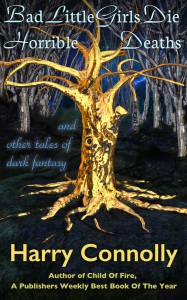
Anyway, short fiction collection! It’s ebook-only, but there’s a new Twenty Palaces novelette in there. Here’s the cover, done by my movie special effects buddy Jim Myers.

Cover art for Bad Little Girls Die Horrible Deaths And Other Tales Of Dark Fantasy

Thanks, Jim

As I said yesterday, I’m on a bit of a social media break, mainly to steal back some time for writing and family. So far it’s going well.

Taking some time away

Standard

This is a brief notice to say that I’ll be taking some time away from social media for the next few weeks. I’m not going on a fast, and I’m not moving to an internet-free cabin in the mountains, but I’m am going to interact with fewer people online and with more people offline. I’m also going to focus more on my book. I expect to be checking my email regularly, but not every day. I also expect to check Facebook, Twitter, and G+ once in a while, but not often.

More and more, I’m tempted to just stop maintaining any social media whatsoever. Maybe this little break will cure me of the urge.

UNBOUND preorders available

Standard

The anthology I’m going to be appearing in–with Jim Butcher, Mary Robinette Kowal, Seanan McGuire, Joe Abercrombie, and Terry Brooks–is available for preorder. Check out the cover art and the table of contents.

My contribution is set during the events of The Way into Chaos. (Spoilers!)

In the Midst of Death, by Lawrence Block

Standard

In the Midst of Death (Matthew Scudder, #3)In the Midst of Death by Lawrence Block
My rating: 4 of 5 stars

Matt Scudder is a former cop and an unlicensed private investigator. Sometimes he does favors for people, and they give him money as a favor in return. This time he’s hired by a cop who’s accused of extortion; can Scudder convince the accuser to retract?

Of course things get complicated and there’s a murder. The cop claims he’s been framed by other cops, and Scudder is the only one who can help.

This is early in the series, when Scudder was still drinking heavily. It was much later that he joined a 12 step program and struggled to keep his life together. I’m not sure which version I prefer.

The weird thing is that, while I enjoyed the book–the tone, the characters, the plot–I’d completely forgotten I’d read it before. Read it and didn’t remember it at all, except for one sentence. I rarely reread deliberately, and this isn’t a book I would have tackled again if I’d recognized that utterly generic title.

Buy this book.

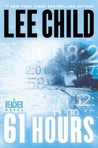
61 Hours by Lee Child.

Standard

61 Hours (Jack Reacher, #14)61 Hours by Lee Child
My rating: 3 of 5 stars

The Jack Reacher novels are interesting, in that they’re enjoyable but not particularly involving. Reacher is the basic competence-porn thriller hero, who can work out where a fugitive has run off to after nothing more than a brief phone call, but doesn’t recognize the killer when the plot needs him to assume something else.

The heroic levels of research that books like this are built on is often the best part, like reading an oddball magazine article on, say, congressional boondoggles during the Cold War. Unfortunately, “Show the research” can be intrusive, too. When Reacher is handed a gun, do we need a rundown of the manufacturer’s founding like some Wikipedia copy pasta? Nope. We get it anyway.

The climax was so absurd that I threw credulity aside and enjoyed it as camp. I prefer thrillers that strain credulity, and know it. It’s fun.

Buy this book

Child of Fire on sale

Standard

I woke up this morning and saw this:

I don’t subscribe to BookBub‘s newsletter (which shares promotional deals with large numbers of readers, and is a powerful marketing tool) but I do know they’re choosy about which books they choose. Anyway, it seems that today they’ve chosen mine. It was submitted by Del Rey, of course, and they didn’t let me know about it, of course.

Still, BookBub favors sale prices, and that means the ebook edition of Child of Fire is on sale right now for only $1.99. If you haven’t read it, here’s your chance (buy links at the bottom of that page).

Update: BookBub bumped the sales rank to 780, which is pretty good, six years after the novel was released.

What makes a classic, according to a 13 year old

Standard

On Thursday afternoon, I was working with my son on his homeschool reading. He’d just finished Fahrenheit 451, and he explained that he liked the chase scenes at the end more than the setup at the beginning and middle.

“It seems to me,” he explained, “that in books that are considered classics, they’re more concerned with the… psychology of the characters than in the chase stuff.”

I agreed with him.

That night was family movie night. we picked MARATHON MAN, which was on Netflix Streaming. Spy thrillers are a big hit with the kid, because he’s a big fan of, as he puts it, “smart people being smart.” That’s why he prefers Mission Impossible to James Bond, and why he had an allergic reaction to Dumb and Dumber.

Anyway, Marathon Man’s dental stuff went by without much comment, but the movie was slow (compared to the stuff we make the time to see in the theater) and it was low-key, and it was concerned with the relationship between the characters. When it was over, I asked him what he thought.

“I liked some parts.”

That’s his answer when he finds long stretches of a film kinda dull.

“It’s a classic seventies thriller. Remember what we said earlier about classics? The long shots of people’s faces, or the awkward conversations they have, are their to show the psychology, like you said. Maybe the greatest story ever would combine the character and the exciting event, but we can’t all be Shakespeare.”

Then he nodded and pointed at me, and retreated to his bedroom to draw or read his latest light novel. Anything to avoid a longer conversation about a movie or book.

My wife squeezed my hand and said “Very good. Very good.” She’s happy when we can explicitly tie movie night into his schooling. “But it was pretty slow.”

Three Shows I Watch on Netflix That I Won’t Be Recommending Ever

Standard

Somewhere in my list of incomplete blog posts I have a piece I’ve started months ago about forgiving the shows you enjoy. Everyone does it. Everyone has to. A terrific show has a weak episode, or a joke that’s in bad taste, or a special effect that looks fake as hell, and you shrug it off, because the rest is worthwhile.

Well, this post is going to be about TV shows I watch(ed) on Netflix that were in some ways wonderful, but which have flaws that are so egregious that I don’t recommend them to anyone. First up:

FINDER

Premise:
An Iraqi veteran receives a head injury that changes his personality and thought processes so that he can discern connections other people would never notice, making him a savant when it comes to finding lost items and people.

What Works:
Geoff Stultz is fantastic as Walter, the veteran who has been so completely changed that he cares about almost nothing except whatever he’s obsessed with finding at the moment. The late Michael Clarke Duncan is wonderful as the kind-hearted, staunchly ethical friend and business manager. Like a lot of shows, the relationship between the regular characters is what sells it. Walter is brilliant and erratic, but once he starts searching for something, he becomes obsessed and can’t stop. He has also lost much of the social skills he used to have, so the people around him are always trying to protect him, especially from himself.

And yeah, it’s a bit of a Sherlock Holmes thing, but with actual humor and some irrational processes. The lost items Walter is sent to find is usually a person, but not always. The walk-on roles for each episode have complexity to them, and the show benefits from not having the same old same old in every episode. Great idea for a premise, well executed.

Why I Don’t Recommend it:
That would be the vicious racism. Note for creative people of all types: “gypsy” is not synonymous with “gangster” or “career criminal”.

DEATH IN PARADISE

Premise:
A humorless, uptight detective from London finds himself transferred to an island paradise in the Caribbean, and he hates it.

What Works:
Most TV shows sink or sail based on the relationships between the main cast, and this fairly standard episodic whodunnit (complete with a “gather all the suspects to reveal the murderer” climax) leans heavily on the main cast. But it works. DI Richard Poole hates the heat, sun, sand, and relaxed lifestyle of the Caribbean–he even hates the run down (but beachfront! with gorgeous view!) house assigned to him. He insists on clinging to the symbols of his authority–especially the jacket and ties–because he just can’t adapt.

It’s a funny show. Not in a “hilarious belly-laugh” sort of way, but they’ve cast charismatic actors (including the guy who played Cat on Red Dwarf) and everything clicks. They even play fair with the clues. There’s some unfortunate stuff with the lead actress–TV is always trying to cram romantic story lines where they don’t belong–but it didn’t work and they recognized that and backed off.

Plus: gorgeous scenery.

Why I Don’t Recommend It:
The pilot episode starts with the current DI being murdered, and Poole is sent to investigate, then trapped in the assignment. However, as the third season started, the actor playing Poole wanted out (apparently for personal reasons: too much time shooting on the islands away from his family). So, to bring in a new DI, they did the same thing as in the pilot: they murdered the old one.

Some shows kill off characters all the time. Game of Thrones kills characters you love and hate every episode, it seems. But this? Not that kind of show. DI Poole is a comic figure, and we like him, and seeing him murdered, up close, with an ice pick… well, let’s just say the fun was spoiled.

Of course they had to bring in a replacement lead, and he had to not quite fit in without being identical to the previous character’s predicament. While it’s not the actor’s fault, the new character is ridiculous and the rhythm is ruined.

Maybe watch the first two seasons and pretend the rest doesn’t exist? Or not.

THE GOOD GUYS

Premise:
Fussy, rule-abiding Detective Jack Bailey is partnered with old-school rule-breaking Detective Dan Stark because the whole department hates them both, and no one can stand to have them around. They’re given the pettiest, most bullshit crimes to investigate which always leads to a major case.

What Works:
Jack thinks it’s a good idea to correct his superiors’ grammar, and Dan won’t stop talking about the time he and his old partner saved the governor’s son back in the 80’s (and that there was a TV movie of the week made about it). Together they’re an excellent double act (straight man and comic) and the show is pretty funny, even though it doesn’t have as many laughs as it probably should have.

The crimes the leads are given to investigate–smashed vending machine, stolen dry cleaning–are handed out like insults, but somehow the people involved always connect to a huge crime that no one else in the department knows about. The plots are structured like a farce, and each episode wraps up with an extended comic action scene like a shootout or car chase.

The villains are also great characters, from the vegan bank robber to the good old boys who think it’s their patriotic duty to steal cars from British criminals. Really, as fun as the plots can get, and as strong as the two leads are in their roles, it’s the attention to creating interesting, quirky villains in the Elmore Leonard mode that makes the show work.

Why I Don’t Recommend It:
The moment for a show like this has passed, hasn’t it?

It’s one thing to feature a comicly ridiculous rule-breaking cop to make fun of the trope of the renegade cop, but we’ve seen rule-breaking cops in real life, and the effect they have is anything but comic. So, it’s a fun show, but some people will take it with a heavy dose of ick.